How can an online shop get its first 100 orders?
You get your first 100 orders by selling first to people who already know you — past customers, neighbours, your own street — then to one narrow group you can name, and only then by widening out. The goal is not traffic; it is 100 people who trust you enough to pay once.
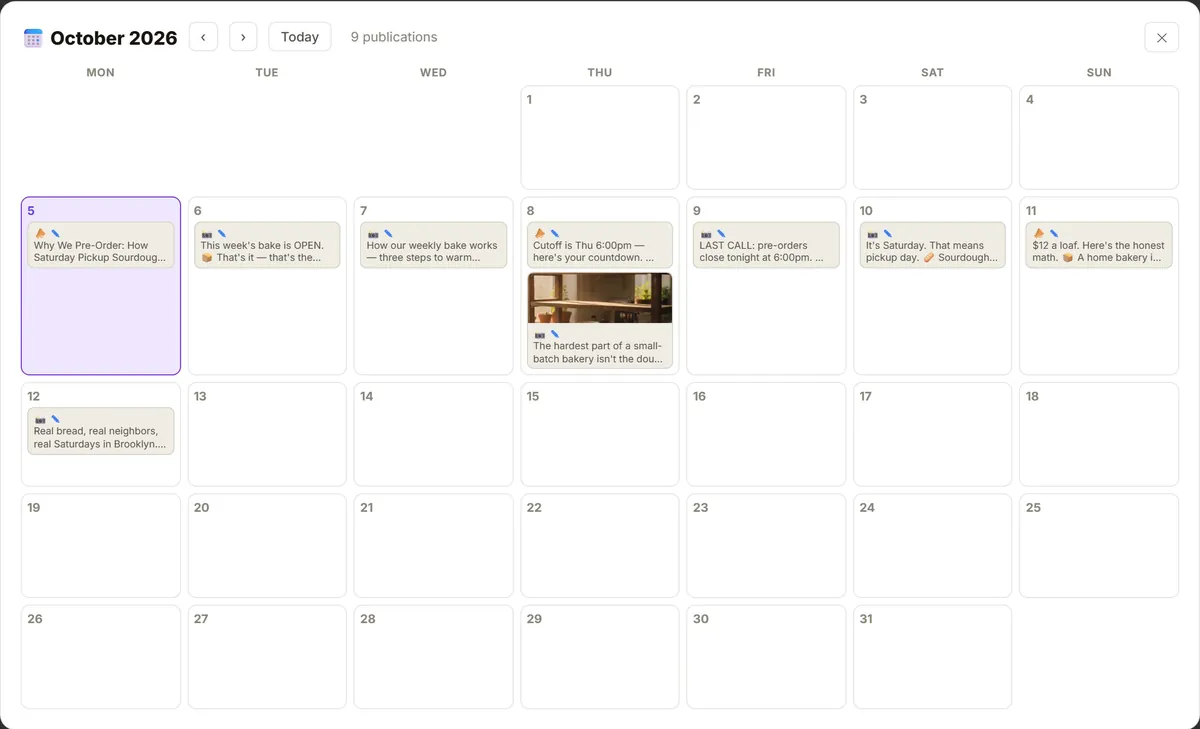
Below is a plain, step-by-step way to do that, with examples from a bakery, a barbershop, a gym and a small online shop. No ad budget required to start, and no hype.
Why do most shops stall at order 5 instead of 100?
Most small shops do not fail from lack of visitors. They fail because they try to reach everyone at once, so nobody feels spoken to. A shop selling handmade dog collars that posts to "all pet lovers" gets ignored; the same shop posting in one local dog-walking group gets its first ten orders.
100 orders is a small, reachable number if you count it in layers:
- Orders 1–20: people who already know you — friends, past customers, neighbours, your own social followers.
- Orders 21–60: one narrow audience you can describe in a sentence ("new parents in our town", "people who just moved here").
- Orders 61–100: repeat buyers and the friends they tell.
Write those three layers on paper before you do anything else. Each layer has a different job.
Step 1: Make the shop ready for the first ten buyers
Before you ask anyone to buy, fix the four things that quietly kill first orders. A bakery that takes orders only by phone will lose half of them; a barbershop with no online booking link loses the evening crowd.
- One clear offer. A visitor should understand in five seconds what you sell, what it costs, and how to buy. If your homepage needs explaining, it is not ready.
- Prices visible. Hidden prices make people leave. Even "from €X" is better than nothing.
- One way to pay, working. Test a real order yourself with a real card. Then test it on a phone.
- Delivery and returns in plain words. When it ships, what it costs, what happens if it is wrong.
- A way to collect emails. Even a simple "get 10% off your first order" box. Those names become your orders 40–100.
Checklist: can a stranger buy in under two minutes on a phone, without asking you a question? If not, fix that first.
Step 2: Ask the people who already know you (orders 1–20)
This feels awkward and works better than anything else. A gym that emails its 60 existing members "bring a friend for a free month, and we will give you both a discount" gets sign-ups the same week. A barbershop texts its regulars about a new booking link and fills quiet Tuesdays.
- List 50 people who know your business: past customers, neighbours, suppliers, your own followers.
- Send each a short personal message — not a mass blast. One sentence about what you sell, one link.
- Ask for a share, not just a purchase: "If you know someone who needs this, would you pass it on?"
- Put a small card or QR code in every bag, box and receipt.
Twenty orders from people who already trust you is normal. Do not skip this layer because it feels small.
Step 3: Pick one narrow audience and go where they already are (orders 21–60)
Now choose one group you can name in a single sentence, and show up where they already gather. Not "everyone who likes cake" — "offices within a 10-minute walk that order birthday cakes".
| Business | Narrow audience | Where they already are |
|---|---|---|
| Bakery | Local offices ordering birthday cakes | Nearby office managers, local business groups |
| Barbershop | Students new to the area | University noticeboards, student groups |
| Gym | People back from injury | Physiotherapy clinics, local running clubs |
| Online shop | One product for one problem | One relevant forum, group or newsletter |
Concrete steps:
- Write the sentence: "I sell ___ to ___ who ___ ."
- Find three places those people already talk: a local group, a newsletter, a noticeboard, a clinic, a club.
- Make one honest introduction — not an ad. Say who you are, what you sell, and offer something small and real (a sample, a free first class, a discount code for that group).
- Ask the first buyers to leave a review. Reviews turn later visitors into orders.
Step 4: Turn 60 buyers into 100 with repeat orders and referrals
The cheapest order is the second order from the same person. A barbershop that books the next appointment before the customer leaves keeps them; an online shop that emails "your coffee is probably running low" gets a reorder.
- Email your buyers once a month with something useful, not just a sale: a recipe, a tip, a new arrival.
- Make reordering easy: a link straight back to what they bought.
- Ask for a referral at the right moment — right after a good experience, not weeks later.
- Track one number: orders per week. If it is not moving, change the offer, not the ad budget.
If you sell locally, a simple loyalty card or a "bring a friend" code does more than most online ads at this stage.
Where can a small team get help without hiring a marketer?
Most owners stall here because the work is not hard, it is just constant: finding people to contact, writing posts, keeping the shop page current. That is the gap Agentica is built for.
You paste your website and its AI agents read your offer, prices, hours and audience, then plan the work. The sales agent finds real local businesses on Google Maps with their public email and writes each one a personal email; the social agent plans posts and makes short videos from your own live website. Every email and post waits in your approvals inbox — nothing is sent or published until you say so. It does not invent reviews or numbers; content is checked against what your business states.
That fits the steps above: it can help with the narrow-audience outreach in Step 3 and the monthly posts in Step 4. It does not replace the awkward personal messages in Step 2, and it does not guarantee sales. If you would rather do it all by hand, the steps above still work — it just takes longer.
What does not work (be honest with yourself)
- Buying followers or email lists. They do not buy, and they damage your sender reputation.
- Broad paid ads before you have 20 orders. You will spend money learning what your first buyers could have told you for free.
- Discounting to strangers. It attracts people who only buy on discount and trains your real customers to wait.
- Waiting for the perfect shop. A working shop with a clear offer beats a beautiful one nobody visits.
- Copying big brands' tone. Your advantage is that you are small and local; sound like it.
Also honest: no tool, including Agentica, can promise 100 orders. Results depend on your offer and your market. What you can control is how many of the right people hear about you, and how easy you make it to buy.
Official guidance: Marketing and sales (U.S. Small Business Administration) · Web Vitals (web.dev (Google)) · SEO Starter Guide (Google Search Central)
Frequently asked questions
How long does it take to get the first 100 orders?
For a small local shop, weeks to a few months if you work the three layers steadily. Shops that wait for traffic instead of asking people directly often take much longer.
Do I need to spend money on ads?
Not to start. Your first 20 orders should come from people who already know you, and the next 40 from one narrow audience you reach directly. Ads make more sense once you know what message sells.
What if I do not have any customers yet?
Start with neighbours, local groups and one narrow audience. Offer something small and real — a sample, a free first session, a discount for that group — and ask the first buyers for a review.
Is one product enough to reach 100 orders?
Yes, if it solves one clear problem for one clear group. A narrow shop is easier to recommend than a shop that sells everything.
Can Agentica send emails or publish posts for me?
It prepares them and queues them for your approval. Nothing is sent or published in your name until you approve it, though you can choose to auto-approve a category.