How Photographers and Videographers Find Clients
Photographers and videographers find business clients by going where local businesses already look for help: referrals from people they have worked with, a small portfolio aimed at one type of client, direct outreach to named businesses, and being findable when someone searches for a photographer in their town. The work is steady and unglamorous — a few repeatable steps done every week beat waiting to be discovered.
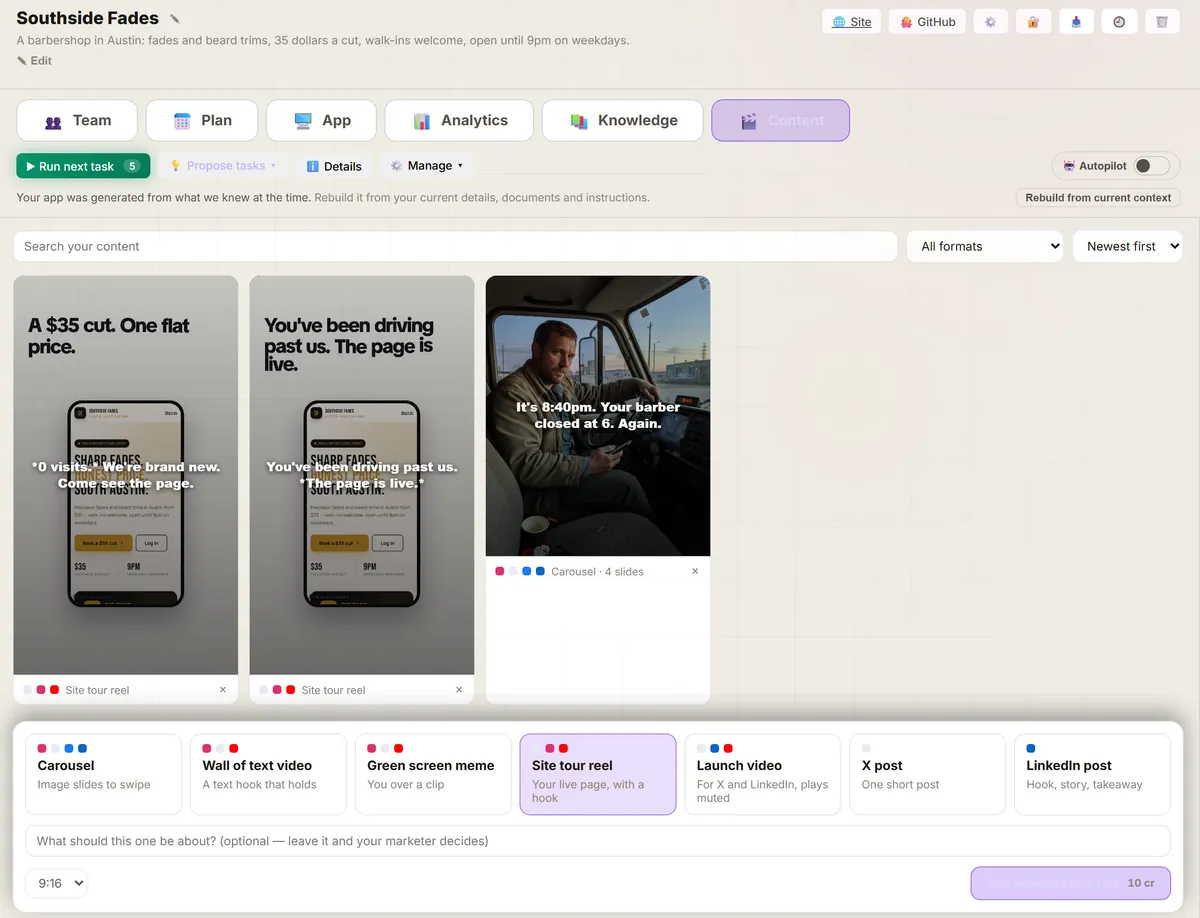
Most owners asking this question are on the other side of it: a barbershop, bakery or gym that needs photos and video, wondering how the people who shoot them actually get hired. The same steps explain both sides, because the photographer who shows up with a clear offer and a few relevant samples is the one who gets the job.
Myth: clients come from posting beautiful photos on Instagram
Posting good photos helps, but a feed of pretty images rarely turns into booked work on its own. Buyers hire a photographer they can picture at their own location, shooting their own kind of business, and a feed of landscapes or weddings does not show that. A business account gives the photographer reach data — which posts actually get seen by local people — and that data is more useful than likes. Switching to a business account on Instagram is free and shows how far each post travels.
What actually converts is a small, specific portfolio plus a direct message or email to a named business. A videographer who wants gym clients should post three short clips of a gym floor, a trainer talking, and a member finishing a set — then send those clips to five gyms in town with a one-line note about what a similar clip did for another gym. The post is the proof; the message is the ask.
- Keep a page or highlight for each client type you want: bakery, barbershop, gym, salon.
- Post the work, then send it to ten businesses that match it.
- Track which posts reach local accounts, not which get the most likes.
Myth: a big following means steady bookings
A large following is not a client list. Followers are mostly other photographers, out-of-town people, and accounts that will never hire anyone. Bookings come from a short list of businesses in driving distance that have a reason to need photos or video this month — a new menu, a renovation, a grand reopening, a seasonal promotion.
The practical version is a lead list. Write down twenty local businesses by name, with the owner's name, a public email, and one reason each might need visuals soon. A barbershop with a fresh paint job, a bakery launching a new pastry line, a gym starting a beginner class — each is a reason. Twenty names worked through in a month beats a thousand followers.
| What owners assume | What actually books work |
|---|---|
| Grow the follower count | Build a list of 20 named local businesses |
| Wait for inquiries | Send 5 personal emails a week |
| Show every kind of shoot | Show one kind of shoot, done well |
How do photographers get their first business clients?
Photographers get their first business clients by offering a small, low-risk first job to businesses they can walk into. A free or cheap 30-minute shoot — five usable photos for a bakery's menu board, one short clip for a gym's social page — gives the owner something to see before committing to a bigger package. The first job is a sample, not a discount habit.
Walking in matters more than email for the first ten clients. A barbershop owner is behind a chair most of the day and will talk to someone who walks in with a phone showing three photos of a similar shop. The conversation is short: here is what I shot for a shop like yours, here is what five photos would cost, here is when I could come by. Leave a card and one printed photo.
- Pick one business type within a few miles.
- Shoot one example on your own time so you have something to show.
- Walk in during a quiet hour, show the example, name a price, leave contact details.
- Ask each yes for the name of one other owner they know.
Myth: referrals happen by themselves once you do good work
Good work is necessary and not sufficient. Clients refer when they are reminded and when referring is easy, so the photographer has to ask and make the ask simple. A bakery owner who loved the photos will happily pass the name along — if the photographer asks a week after delivery and gives them a link or a card to forward.
A simple habit works: after every job, send the finished files with a short note thanking the owner and asking for one introduction to another owner in the area. Then check back in three months with a new idea — a seasonal shoot, a short video for a promotion. Repeat clients and their introductions are usually the cheapest work a photographer gets, because no advertising is spent finding them.
The same logic runs the other way for the business owner. A barbershop that liked its shoot should tell the photographer which other local owners it talks to, and ask the photographer to use the shop as a reference. Both sides get more from a referral than from a cold approach.
Myth: you need a marketing plan and a big ad budget
A photographer or videographer does not need a large ad budget to find clients, and spending on ads before the offer and samples are clear usually wastes money. The U.S. Small Business Administration's guidance on marketing and sales puts the plan and budget before the channels, and that order matters here: decide who you serve, what a job costs, and how many jobs you need, then choose where to spend.
A workable monthly budget for a solo shooter is small: a domain and simple site, a business social account, printing for a few dozen cards and sample prints, and time. Time is the real spend. Five personal emails and two walk-ins a week is roughly twenty hours a month and produces more conversations than a small ad campaign.
- Write one sentence: who you shoot for and what they get.
- Set a monthly number of jobs you need, then work backward to how many conversations that takes.
- Spend on samples and printing before spending on ads.
Myth: short video is only for big brands with a crew
Short vertical video is one of the cheapest ways a photographer or videographer can show what they do, and it needs no crew. A phone, a window, and a subject are enough. YouTube's help on creating YouTube Shorts covers the format: vertical video up to three minutes, made and posted from a phone. A gym clip of a member's first pull-up, a bakery clip of dough being shaped, a barbershop clip of a fade in progress — each is a sample and an advertisement at once.
For the business owner reading this, the same format is the reason to hire a videographer for a half day rather than a full production. Ten short clips shot in one visit can feed a business's social pages for weeks. Ask the videographer to deliver vertical clips sized for phone screens, not just a long edit.
- Shoot vertical, in the business's real space, with real staff.
- Keep each clip to one idea: one product, one moment, one person.
- Deliver clips the owner can post without editing.
What does not work
Mass-sending the same email to hundreds of businesses does not work, and it damages the sender's name in a small town where owners talk to each other. A generic message that could be sent to any business reads as spam and gets deleted. A personal note that names the business, mentions something specific about it, and offers one clear next step gets replies.
Waiting for a perfect portfolio does not work either. Photographers who hold back until every image is portfolio-grade book no work and learn nothing. A small set of honest samples aimed at one client type is enough to start conversations, and each job improves the set. The same is true of pricing: quoting nothing because the price feels awkward loses the job to whoever names a number first.
- Skip bought email lists and bulk blasts.
- Skip generic messages that do not name the business.
- Skip waiting for a perfect portfolio; start with three good samples.
Where Agentica fits, honestly
Agentica (ai-biz.dev) is a tool for the business owner who needs customers, and it overlaps with this subject in a narrow way. A photographer or videographer with a website can paste the link and the agents read the offer, prices, hours and audience, then plan the work: find local businesses on Google Maps with public emails, write each one a personal email, plan social posts and make short videos from the site's own facts. Nothing is sent or published until the owner approves it, and content is written only from what the business states — no invented ratings or numbers.
For a small business hiring a photographer, Agentica does not replace the photographer. The tool plans posts and writes emails; the photos and video still come from a person with a camera. What the tool can do is keep the outreach and posting steady while the owner runs the shop. Pricing starts at €12/month for Starter with 30 credits and a 3-day free trial, €29/month for Pro with 80 credits, and €79/month for Agency with 250 credits. There is no free plan; the trial requires a card and costs nothing if cancelled before it ends.
Results depend on the offer and the market. Agentica does real work — leads, emails, posts, site edits — and does not guarantee sales.
Frequently asked questions
Should a photographer pay for ads or for samples first?
Samples first. A few printed photos and a short clip that match one client type give a photographer something to show in a walk-in or an email. Ads work better once the offer and the samples are clear, because the ad then points at something a business owner can judge.
How many businesses should a photographer contact each week?
Five personal emails and two walk-ins a week is a workable pace for one person. The number matters less than the quality: each message should name the business, mention something specific, and offer one clear next step.
Does a business owner need to prepare anything before a shoot?
A short list helps: the products or moments to feature, who will be on camera, and where the photos will be used — menu board, social page, website. A videographer shooting vertical clips needs to know the phone-screen format in advance so the framing is right.